Sunday, August 20, 2023

Weak Market: What Comes Next?

 
We've seen a stock market that has been rather weak over the last couple of weeks.  Higher interest rates at the long end have particularly impacted rate-sensitive sectors, such as utilities and real estate, and have provided support for the U.S. dollar and dollar-related carry trades.  Speculation has shifted from imminent recession to an environment of "sticky" inflation and rates that are likely to be "higher for longer".  So is the recent pullback in stocks an opportunity to participate in the longer-term uptrend, or is it a warning to preserve capital?

Let's step back a minute.

I observe two problems among market participants.  The first is to construct trades without underlying robust ideas.  Traders who look to charts for "setups" are particularly guilty of this mistake.  The second problem is to generate big picture, top-down narratives based on fundamental data, but not anchor these themes in well-analyzed trades that provide favorable reward relative to risk in a shorter-term time frame.  My experience with successful market participants is that they are both investors and traders.  They generate robust bigger picture ideas through unique, rigorous analyses and they then translate those ideas into good trades by rigorously assessing shorter-term risk-reward.

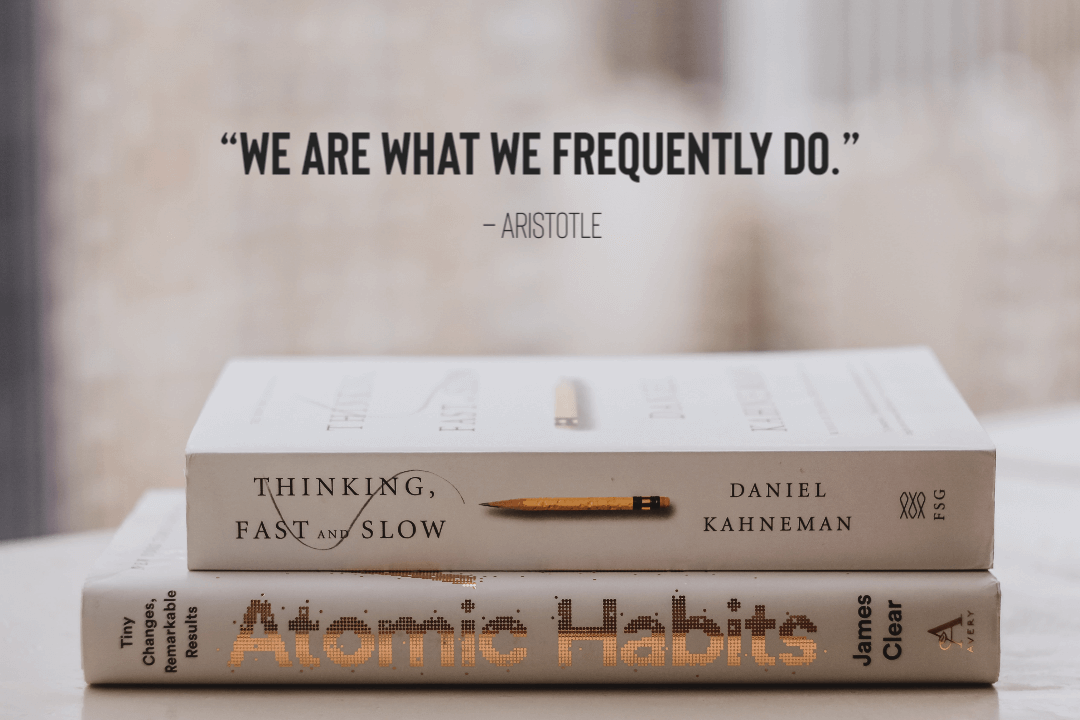
In the terms of Daniel Kahneman, success in markets requires both deeper, slower thinking and faster, flexible thinking.  In practice, this means having consistent strategies but flexibly adapting the implementation of those frameworks based upon current conditions.

So now let's look at the current market:

I notice that, across the NYSE universe, we have seen over 1500 stocks making fresh monthly lows and fewer than 1000 registering new three-month lows.  That is what we would expect during a correction in a rising market.  When one-month lows *and* three-month lows are high (bear market), next ten-day returns since 2010 have been negative.  When one-month lows have been high and three-month lows have not been significantly elevated, next ten-day returns have been distinctively bullish--significantly above average.

In short, context matters.

When analyzing market returns, it's not enough to examine one time frame.  We want to see how the shorter time frame fits into the market's larger picture.

Let's take a second example.  This past week, looking across the NYSE universe, we have seen very few stocks giving buy signals on two technical trading systems, the Wells Wilder Parabolic SAR and the Bollinger Bands.  These systems assess strength and weakness across shorter (SAR) and medium (Bollinger) time frames.  When the number of stocks providing buy signals on the SAR has been weak but the number of stocks giving buy signals on the Bollinger measure has been relatively strong, next ten-day returns since 2019 have been flat to negative.  When we have had few buy signals on both technical systems simultaneously, next ten-day returns have been solidly bullish.

Again, context matters.

Across a number of these kinds of analyses, we see favorable average near term returns after selloffs in rising markets.  That's the perspective from the slower, deeper analyses.  Now, going forward, if we see selling pressure that cannot result in lower prices, we can speculate that bears are trapped, will need to cover, and we could bet on higher prices going forward.  Conversely, if we see that buying pressure is limited and/or cannot drive price meaningfully higher, we can entertain the idea that this time, indeed, may be different and follow that up with further analyses and possibly very different bets.

The most successful traders I work with look at new and different things and they look at things in new and different ways.  Over time, unique returns cannot come from consensus thinking.  

Further Reading:

The Momentum Curve

.        

Monday, August 14, 2023

Your Flaw Is Your Strength

 
While writing my next book, I came across a thought-provoking essay from a well-known Jewish Rabbi, Zalman Schachter-Shalomi.  His topic was the opal stone that we see in jewelry.

The opal gem consists of small silica spheres and gaps between the spheres, which in one context could be considered flaws.  However, the very gaps that occur on the opal's surface are what create the opal's beauty when light is shined.  The light rays are diffracted by the spheres and gaps, which break the light into a fiery array of component colors.  The Rabbi's point is that we are like opals:  what are our flaws when viewed one way become our greatest sources of beauty in a different light.  

Our flaws, in the right light, are our strengths.

For example, in one light, our ambition and achievement orientation are flaws, leading us to become so wrapped up in our work that we neglect our health and relationships.  Those flaws lead us to trade from the egooverreact to gains and losses, and chop ourselves up when big moves aren't realized.

In a different light, our ambition and achievement orientation lead us to define and seek goals and ideals and realize our vision for being the best possible version of ourselves. 

There are so many ways in which our flaws and strengths mirror one another.  Think about how our sensitivity in relationships can lead to caring, but also hurt and disagreements.  Think about how our desire for self-development can result in personal growth--and in an insensitivity to others.  Think about how our commitment to not losing money can stand in the way of making significant money.

We are like opals, and our challenge is to find the light that enables us to shine.

Here's a simple exercise to help with that challenge:  Each week, identify the one most fulfilling, meaningful event that occurred to you during the past seven days.  Then identify the one most frustrating, negative event over that same period.  Then reflect on how the two are related and what made the positive experience so special and what made the negative experience so disappointing.  What is the light in which you are simply a stone with spheres and gaps, and what is the light in which you shine?  Over time, keeping this simple journal, you'll discover the contexts in which you display your fire.   

The goal is not to eliminate your flaws, but to turn those into sources of beauty.

Further Reading:

Greatness in Life and Trading

.   

Sunday, August 06, 2023

Why Do I Get Chopped Up In My Trading?


The most recent post took a look at why we can perform well in markets, only to suddenly make poor decisions and blow up.  Now we'll examine a second common complaint of traders, especially in recent markets:  how we can develop good ideas for trades but then get chopped up in actually trading those ideas.  Most often this occurs when we are counting on momentum or trend--shorter or longer-term extensions of directional moves--only to experience reversals.  

Getting chopped up can cause considerable psychological frustration, but I'm not sure it's a purely psychological problem.  Let's look at the last 10 years of data from the stock market to illustrate the point:

For the first investigation, I broke down the daily closing cash VIX level into quartiles and examined the forward returns in the SPX.  When VIX has been in the lowest half of its distribution over the past ten years (below 16.66), the next five days in SPX have averaged a gain of only +.06%.  When VIX has been in the highest half of its distribution, the next five days in SPX have averaged a gain of +.36%.  The results widen out over time, so that the next twenty-day return in SPX for the two VIX conditions have been +.32% vs. +1.39%.  We know that VIX tends to fall in a rising market and rise in a falling market.  Indeed, there is a very significant correlation between VIX and most recent 50, 100, and 200-day returns.  What the data are telling us is that we are most likely to get a meaningful five-day bounce in a weak, volatile market.

For the second investigation, I examined the daily 5-day RSI for every stock in the SPX and the overall average level of those 5-day RSIs.  I then broke those daily average RSIs into quartiles over the past ten years.  Sure enough, when the RSIs have been in their weakest quartile, the next five days in SPX averaged +.49% vs. +.11% for the remainder of the sample.  When the market sells off over a five-day period, the next five day returns are superior to all other market occasions.  

For the third investigation, I examined the percentage of stocks in the SPX closing each day above their five-day moving averages over the past ten years.  When that percentage has been in its highest quartile, next five-day returns have averaged only .06%.  When the percentage has been in its lowest quartile, net five day returns have averaged a respectable +.51%. 

Historically, strong markets have led to more modest forward returns and weak markets have led to superior returns.  This occurs over multiple time frames.  Indeed, by creating a momentum curve across various time periods, we can develop reasonable forecasts for future market moves.

We get chopped up when we expect momentum and trends to extend.  Our expectations set us up for frustration.  This becomes a particular problem if we wait for "price confirmation" to enter a rising or falling market.  By the time that confirmation occurs, the anticipated forward returns are diminished.  One way of overcoming this problem is to investigate the presence of cycles in the market data and use short-term cycles to trade trending markets.  I have consistently found that how we trade a market idea is just as important to profitability as the idea itself.  If we can find short-term cycles within the market moves we're trading, we can become much better at finding superior risk/reward, both on entries and on take-profit levels.

Not all problems that impact our psychology are psychological in origin.  Our tendency to think in straight lines and ignore cycles breeds considerable frustration.

Trading well is the best formula for a winning psychology.

.

Sunday, July 30, 2023

Why Do I Blow Up My Trading?

 
The recent blog post presented ways in which we can listen to our intuitive inner voice as traders.  Sometimes, we not only fail to listen to our inner voice, but actively do what we know to be harmful to our trading and our success.  We trade well week after week and suddenly oversize a position, refuse to act on a stop, add to the losing position, and then blow up.  Or, on the other hand, we become so concerned about losses that we quickly exit winning positions before they reach their targets, leaving significant money on the table and blowing up our chances for real success.  

Why does this happen?  What can we do to keep ourselves aligned with sound practices and processes? 

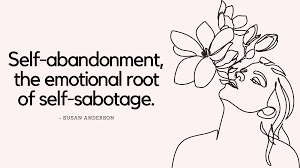
A reader recently reached out, explaining that he once in a while experiences losses that wipe out a large share of his monthly profits.  It is frustrating to trade well most of the time, only to lose discipline and seemingly sabotage all we've accomplished.  As the graphic above suggests, the root of self-sabotage is self-abandonment.  We temporarily lose sight of what we're meant to do and instead act on impulse.  In the terms of the Radical Renewal online book, we abandon the soul of what we do and allow our trading to become ego-driven.  

I have never been convinced that the root of such self-sabotage is a deep-seated, inner desire to hurt oneself.  It is usually not an absence of self-esteem that causes us to become reactive.  Rather, we experience "triggers" that set off automatic and often harmful actions.  The problem is a temporary loss of free will.  Under a certain set of emotional and physical conditions, we behave in pre-programmed ways and become reactive rather than active.  Quite literally, it is a loss of self-awareness that allows us to behave in ways that harm our best interests.

Consider the many situations in which we *never* go on tilt and behave reactively and self-destructively.  We're not careful in crossing busy streets 99% of the time, only to occasionally walk directly in front of traffic.  We don't operate machinery (lawn mowers, ovens) safely most of the time, only to occasionally cut or burn ourselves severely.  Why don't we go on tilt in those situations?  Reason one is that our egos are not involved, and reason two is that we are supremely aware of the dangers at hand.  If I don't *need* to cross the road quickly and I'm mindful of the busy traffic, I am perfectly able to wait for a break in the flow of cars to cross safely.  If I'm clearly aware of danger, I will act with caution.  Always.

This is where it's helpful to engage in a "check up from the neck up" prior to any risk taking.  If a surgeon is scheduled for a procedure, but is in an agitated state because of a personal circumstance, that surgeon will delay the operation.  "Above all else do no harm" is the operative principle.  If a pilot is about to take off for a flight, they reach out to the co-pilot and--together--go through the pre-flight checklist to make sure the plane is truly air-worthy.  If something is wrong mechanically, the flight will be delayed.  Above all else, do no harm.

The opposite of self-abandonment is self-awareness.  If we approach each session of trading--each trade!--the way a surgeon approaches an operation or the way in which a pilot preps for a flight, then we are in the state we're normally in when we're crossing a busy street.  The awareness of risk and danger enables us to do no harm.  It isn't discipline or "process" orientation that enables us to not go on tilt when we're handling a carving knife in the kitchen.  It's the immediate, acute awareness of danger.  The key is self-awareness:  knowing when we're in the wrong mindset for risk-taking.  Like the surgeon, like the pilot, we must take danger so seriously that we're willing to postpone our performance until we're assured that we will "do no harm".  If we've performed our own checkup from the neck up, we're not going to trade on impulse.  

Further Readings:

Understanding Trading Tilt

How to Overcome Tilt

Video on Tilt Trading

Advice on Tilt to SMB Traders

Radical Renewal and the Spirituality of Trading

.

Monday, July 17, 2023

Finding and Following Your Inner Voice

 
The recent post took a look at developing uniqueness as a trader, focusing on developing new sources of data and fresh ways of viewing markets.  In point of fact, however, there are many ways in which we can approach markets uniquely.  One successful money manager recently shared with me ways in which AI can improve the risk/reward of trading.  Another trader is making use of complex options structures to ride out market noise and take advantage of longer-term trends.  But one trader who wrote to me asked a unique question about uniqueness:  Can we find unique edge in how we approach our trading psychology?  Specifically, he asks, are there ways we could become better at listening to our inner voice?

This is a very tricky question and issue.  On one hand, we could view our negative self-talk as an inner voice and allow our worst emotional patterns to control our trading.  On the other hand, we know that the pattern recognition of intuition often manifests itself as an inner voice.  When do we listen to that voice?  When do we challenge that voice and replace it with one that is more helpful?  Consider the example of regret.  Is that a helpful prod that enables us to learn from our mistakes, or is it driving by the rear view mirror and interfering with what is happening here and now?

How can we innovate in tackling our trading psychology?

Consider the above quote from Craig Revel Horwood, choreographer and dance show judge.  What he is saying is not simply to follow your inner voice, but to listen to that voice if it comes while you are following your passion.  In other words, it is the absorption of being in the flow state during an activity we're passionate about that leads to the intuitions of the inner voice.  If we don't have a passion for something, we will not arrive at any meaningful intuitions about that thing.  Plumbing?  Growing watermelons?  Racing horses?  I've never been involved in any of those and guess what?  I have no intuitions whatsoever about how to do them well.

When we are absorbed in a passion, we experience things in new ways and generate fresh perspectives.  It is the depth of involvement that generates the breadth of vision.  Anything we do to more completely absorb ourselves in markets will enable us to see new things and innovate.  As the Radical Renewal online book suggests, we find our inner voice, not by listening to the chatter and self-talk of the ego, but by fully engaging what speaks to our soul.  The self talk of the ego is something we do on auto-pilot.  True intuition comes to us.

And feelings of regret?  When we're fully immersed in markets and feel regret, the odds are good that we can turn what we did wrong into a learning lesson and true growth.  Regret may not feel good, but, as Radical Renewal points out, it is a path to growth in just about every spiritual tradition.  The process of falling short and repenting is quite different from automatic, mindless self-criticism.  One is a path to growth; the other interferes with our performance.

We can find and follow our authentic inner voice only in the full involvement of an activity we're passionate about.  We find our uniqueness as traders when we are most absorbed in--and fascinated by--markets.

Additional Reading:

How We Can Improve Our Access to Intuition

The Role of Intuition in Trading Decisions

.    

Sunday, July 09, 2023

Developing Your Uniqueness as a Trader

 
We commonly hear that a key to trading success is being disciplined and remaining grounded in a robust process.  That is true, but it is only part of the truth.  If we're disciplined in doing the same things as other people, we will simply be more consistent in achieving mediocre returns.  Having worked with many traders and trading firms over the years--and especially having participated in the recruitment of traders at those firms--I can say with confidence that distinctively successful traders view markets in distinctively unique ways.  They don't just have better answers; they ask better questions.  Unusually successful traders simply look at different things than average traders and look at markets in different and distinctive ways.

An important start toward cultivating our uniqueness is acquiring fresh data sets.  In trading the overall stock market, one data set that I have found to be promising is the percentage of stocks within each sector trading above various moving averages.  (Data from the excellent Barchart.com site).  So, for example, I track the percentage of stocks within the energy sector (XLE), consumer discretionary sector (XLY), consumer staples sector (XLP), health care sector (XLV), etc. that are above their respective 20-day moving averages.  This information tells us, not just if the overall market has been strong or weak, but which parts of markets have been particularly strong or weak.

Collecting new data enables us to ask new--and sometimes much better--questions.

So, for example, what have we seen going forward in the overall market (SPY) when consumer discretionary stocks greatly outperform or underperform consumer staples stocks?  Is there unique information in relative breadth strength and weakness?

Sure enough, when the percentage of consumer discretionary stocks above their moving averages has been much greater than the percentage of consumer staples stocks over the past three years, we see notably weak returns over the next five trading days in SPY, but particularly strong returns over the next 20 days.  Interestingly, this is a pattern we also see following unusually strong breadth thrust moves in the overall market:  a tendency to consolidate/pullback in the next few days, followed by upside momentum.  It makes sense that a relative breadth thrust among consumer discretionary stocks would display such momentum, as investors are counting on the kind of economic growth that sustains discretionary spending.

By contrast, when a large percentage of utility company stocks have been trading above their 20-day moving averages, the next 20-day returns in SPY have been negative, compared with solidly positive returns when few utility company stocks have been trading above their 20-day averages.  The flight to the safety of yields has not been a promising medium-term indicator of returns for the overall market.     

How about when traders aggressively move into small cap stocks?  When the number of stocks in the SP 600 small cap index trading above their 20-day moving averages has been quite high, next 5-10 day returns in SPY have been negative, before subsequently going significantly higher.  Once again, this is a pattern similar to that observed with general breadth thrusts.

And the current market?  We've seen solid breadth among the industrial stocks (XLI) with the great majority of shares trading above their 20-day moving averages.  Interestingly, over the past three years, that has led to short-term follow-through in SPY, but relatively weak returns over a next 20-day period.  And recent breadth strength among real estate stocks (XLRE)?  That, too, has been associated with relative weak SPY returns over a next 20-day horizon.  Those developments, on top of recent narrowing of outperformance by XLY over XLP has me cautious on the market.  Notice how the patterning of strength and weakness across sectors provides multiple perspectives on overall market performance as well as the performance of each sector.  When the weight of historical evidence lines up with what we're seeing in current price action, we have the makings of a promising trade.

This is but one example of how we can develop distinctive returns by studying distinctive market information.  I also collect databases of stocks making new highs and lows on a one- and three-month basis; stocks displaying buy and sell signals on various technical market indicators; etc.  All are ways of understanding when moves tend to reverse and when they tend to continue.  Trading success starts with looking at unique things, asking unique questions, and relying on objective data for answers.

Further Reading:

Trading With Breadth, Strength, and Momentum

.

Sunday, July 02, 2023

Is Your Trading Truly Meaningful?


A while back, I wrote a post about research that shows how living a purposeful life is a key to happiness and life satisfaction.  That applies to our trading, as well.  If we are purposeful about our development as traders, we are most likely to be successful *and* we are most likely to be fulfilled in our efforts.  My article for Forbes several years ago summarized research regarding the amazing psychological benefits of living purposefully.  It's when our life is inspired by a why that we are most likely to succeed in the quest for how.  

As the John Maxwell quote above points out, having a genuine and meaningful purpose is a vital part of what gives our lives significance.  The ego might look for more strokes, but what feeds the soul is the opportunity to make a "contribution" by doing something "noble".  This is why spirituality is vital to trading careers and why so many of our trading psychology challenges occur when we place ego needs ahead of what enables us to thrive.

For many traders, the concept of trading spirituality is an oxymoron.  Trading is all about making money; spirituality is not.  But any activity can be pursued in a manner that is more or less soul-full.  When we have an overarching life mission that improves us and our world, any activity can become a meaning-full path.  We overreact to gains and losses--and we overtrade--when trading is simply about P/L.  When we approach trading as a path for self-improvement, and when we work in teams where everyone is improving everyone else, suddenly we become part of "something noble and purposeful".  

So let's step back and ask ourselves a few questions.  Self-assessment can be uncomfortable, but no change ever comes from staying locked in our comfort zones:

What is your path to greatness?  How does your development as a trader move you forward on that path?  If you're not doing something meaningful and purposeful each day, how can you possibly hope to live a purposeful life?  What meaningful and purposeful thing are you doing with your trading today?  We are most likely to pour ourselves into activities that capture our strengths and our interests.  How will today's trading be fulfilling and rewarding for you regardless of the ultimate profits and losses?  

Great trading, like all things great that we do, comes from the soul.  Perhaps the best thing for your trading psychology is to stand back from profits and losses and cultivate the spirituality of your trading.  The key to mastering trading psychology is to always tap into what is more important to you than the profits and losses of trading.

*

Sunday, June 25, 2023

Making the Transition From Discipline to Commitment

 
How we think, feel, and act at one stage of development in our lives is different from how we approach situations later in life.  As a child, I related to my parents as authority figures and (for the most part!) did what they told me.  Later, in young adulthood, I related to my parents as role models and flexibly integrated parts of them into who I was becoming.  Still later, I became a parent myself and could relate to my own parents as peers and as valued family members offering mutual support.  As we grow, our roles evolve.

Similarly, there was a time early in adulthood when dating was fun and there were lots of people I wanted to meet.  If a relationship became more serious, I often had to hold myself back and rely on discipline to not go after other possibilities and opportunities.  When I met my wife-to-be, Margie, I recognized early on that there was something special in our relationship.  The idea of possibly losing that or watering it down with frivolous involvements was a complete non-starter.  I felt a commitment to Margie and to our relationship and that was all that mattered.  Other possibilities were not temptations.  I did not need discipline to be a loyal boyfriend and husband.  So it's been for the past 39 years.

Early in my trading career, markets were exciting and there were *so* many possible ways of making money.  Out of that enthusiasm, I traded and traded and overtraded.  I also lost money.  With time, I discovered the kind of trading that made sense to me and that was successful for me.  I worked on deepening what I was doing, eventually performing research on short-term price behavior and market breadth that gave me demonstrated edges in my trading.  As I became committed to that style of trading, all the other things became less interesting to me.  I didn't stop overtrading because I had become a ridiculously disciplined person, but because I became deeply dedicated to the best in me.  My faithfulness to good trading was very similar to my commitment to my life's partner.

Just as we undergo a developmental sequence in our relationships with parents and potential life partners, we typically go through developmental stages in our trading.  Perhaps overtrading is like overdating.  It's what we need to do to find what's best for us and that can anchor our sense of loyalty, commitment, and dedication.  Our relationship to markets evolves in ways similar to the evolution of our relationships with our parents and our romantic relationships.  Focusing on discipline to short-circuit this developmental process may be a mistake.  It's not what we need to stop doing that should be our priority, but rather identifying the best of us and pursuing that, because that will inspire our commitment and generate our consistency.

Further Reading:

To Increase Your Discipline, Focus on Your Fulfillment

Two Proven Methods for Building Happiness

.

Friday, June 16, 2023

How to Advance Your Development as a Trader: Key Ideas


I recently participated with Mike Bellafiore of SMB Capital in an excellent conference organized by TraderLion.  The topic of our presentation, which you can watch via video, was trader development:  the best ways of improving our performance in financial markets.  Here are a few key ideas that we touched upon in the session:

1)  Your niche in markets has to be discovered - Only by experimenting in different markets, on different time frames, with different sources of information can you figure out what makes sense to you and what you are good at.  In medical school, students rotate through various clinical services, such as internal medicine, surgery, psychiatry, and family medicine, to experience those specialties first hand.  It is only after experiencing all the major areas of medicine that students make a decision about specializing in a particular area during their residency training.  Similarly, if you're learning markets, you want to try out various "specialties" and discover your potential niche.  Many times, developing traders are so eager to make money that they place their capital at risk right away and try to emulate what they hear from would-be gurus.  That is not how expertise development works.  Trading various ways in simulation mode and with small size allows you to discover who you are and what works for you before you run through your capital.  Because markets are always changing, we must always develop as traders and return to the modes of discovery and learning.

2)  Learning trading is a team sport - There is a reason successful trading firms such as SMB and essentially all successful hedge funds are organized in team structures.  A team leader is an experienced, successful trader who creates a group of more junior traders to assist in the trading process.  The junior members bring unique skills to the team and track opportunities as they arise.  The team leader benefits from the input of team members and serves as a mentor to them, showing them in real time how their ideas are translated into trades and managed as positions.  As a result, the most important learning occurs at the desk, seeing markets and ideas and trading in real time.  The saying in medical school is "each one teach one".  In a successful team, everyone learns from one another.  And if you're an independent trader?  Your challenge is to network with other independent traders who are traversing their learning curves.  This is where trading communities and trading conferences can be particularly helpful.  Share your best ideas online and you'll find that others with good ideas will reach out to you.  That is the start of the kind of teamwork that accelerates learning and development.

3)  Learn from your strengths - Particularly if you're an experienced trader looking to develop your expertise, you want to study what you do best and where your successes have come from.  Research in psychology points to the "flow state" as a unique state of consciousness that occurs when we are immersed in activities that provide optimal challenge and interest.  It is in the flow state that we are most productive, and the flow state fuels our creativity, broadening our perception and helping us detect unique opportunities.  The exercise of our strengths creates the flow experience, so that when we're absorbed in trading in rewarding, meaningful ways, we are most likely to be tapping into the best of us.  When we work in teams with others who have different strengths but who also tap into their flow modes, we find work to be energizing and inspiring--not something that burns us out.

What we do frequently, we absorb.  If we pursue trading the wrong way and create frustrations, we absorb a frustrated mindset.  If we engage trading as an adventure--an opportunity to discover who we are and what we do best--our trading can enrich our lives in many ways and provide a lasting experience of fulfillment.

.

Sunday, June 04, 2023

The Greatest Challenges of Trading Psychology - III: Mindset


In the first post of this series, we took a look at how one of the greatest challenges to our trading psychology comes from approaching the process of expertise development the wrong way, unwittingly creating stresses and trauma that impact our subsequent learning and trading.  The second post examined how we often view financial markets incorrectly, looking for our edge in trading without properly recognizing that these edges are continually changing.  Doing the same thing again and again in the name of discipline is a great way of getting run over--and damaging your mindset--when markets shift.  

In this post, we will explore how the wrong view of mindset leads traders to trade poorly and ultimately hurt their psychology.  Many traders seek an optimistic and even aggressive mindset in the desire to make meaningful money.  By emphasizing the outcome of trading, they ensure that their mindset will rise and fall with their P/L.  An important performance principle is that focusing on the outcome of performance typically gets in the way of performing.  Does a great painter, while creating a work of art, spend time thinking how much the painting will sell for or whether it will be displayed in a famous museum?  Does a surgeon, performing a procedure in the emergency room, dwell on how wonderful the outcome will be?  Positive self-talk may have its place in our psychology, but surely not in the middle of our performances.  For peak performance, we don't want an aggressive mindset, a positive mindset, or an excited mindset.  We want a focused mindset.

This doesn't mean that we eliminate all emotion from performance.  The flow state is one in which we are so absorbed in the doing of an activity that we lose our sense of time and our self awareness.  That is a pleasurable state in itself and a powerful motivator for those who love what they do.  It's in that flow state that we're most likely to be productive and achieve our best efforts.  Interestingly, the flow state is also our greatest source of creativity.  Quite literally, we see markets better when we are highly focused on what markets are doing.  Our self-talk takes us out of flow and often places us in an aroused, fight-or-fight mode in which narrows our perceptual frame.  It's when we're focused and in a state of emotional well-being that we're most likely to act on opportunity.

This is why a major theme of the Radical Renewal online book is that great trading comes from the soul and not from the ego.  When we are outcome-focused, we are ego-focused and that takes us out of the zone of the flow state.  The right trading mindset is absorbed in markets, opening us to the intuition of implicit learning.  It is not coincidence that my research has found that intellectual curiosity is a number one predictor of trading success.  The truly successful traders are motivated by the process of doing and learning, not just by the outcomes of trading.  When we value learning and growing, we can always extract reward from trading, even when profits aren't there.  

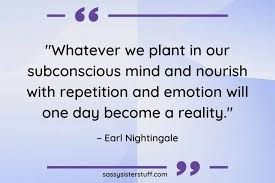
As Earl Nightingale points out above, we are always programming our minds.  What we focus upon, we become.  From that perspective, if there's nothing more important to you than profits and losses, you've already lost.

Further Reading:

.    

Sunday, May 28, 2023

The Greatest Challenges of Trading Psychology - II: Ever-Changing Markets

 
The first post in this series took a look at how one of the greatest challenges to our trading psychology comes from failing to navigate the process of expertise development.  Too often, traders put their capital at risk before they have properly undergone a process of learning grounded in deliberate practice.

In many performance fields that learning process continues throughout one's career.  As soon as a surgeon masters surgical techniques, new approaches to surgery (microsurgery, robotic surgery) come along and promise better outcomes.  That means that physicians always participate in continuing education, updating and upgrading their skills.

Similarly, in business, consumer interests, needs, and demands are ever-changing.  As technology changes, what consumers wanted yesterday (high performing cars) ends up being very different from what they want today (electric motors) and tomorrow (self-driving vehicles guided by AI).  The successful business thus always reinvents itself.  

Financial markets are ever-changing, and that means that any single "edge" in trading cannot be permanent.  A stationary time series is one that is relatively stable with a constant mean and standard deviation.  Tosses of a fair coin form a stationary time series.  I recent asked ChatGPT4 whether financial time series in the stock market are stationary and the response, in part, was: 

"No, stock market time series are generally not stationary.  Stationarity refers to a time series that exhibits constant statistical properties over time, such as constant mean, constant variance and constant autocovariance structure.  In the context of the stock market, prices and returns tend to exhibit non-stationary behavior.

Stock market prices often show trends, meaning they have a tendency to increase or decrease over time.  Additionally, stock market returns typically exhibit volatility clustering, where periods of high volatility are followed by periods of low volatility, and vice versa. These characteristics violate the assumption of stationarity."

What this means in practice is that the patterns exhibited by the market at one point in time can be very different from other times.  Any trading "setup" that worked in the recent past has no guarantee of working in the future.  Volumes change as market participants change.  That alters volatility and trends.  Just like the surgeon or business person, the successful trader has to reinvent themselves to find new sources of "edge".  Failure to detect market changes and adapt to those is one of the greatest challenges to our trading psychology.  In such cases, it's not simply that our psychology undermines our trading.  Our inability to recognize market shifts creates our drawdowns--and that undermines our psychology.

Many traders ground their edge in a particular set of market conditions:  trend, momentum, bullish or bearish movement, etc.  This makes these traders inherently vulnerable.  The real edge in financial markets is the ability to detect when markets change and identify the nature of that change.  Too many traders simply label markets as "directional" or "choppy".  They make money in the directional markets and lose money in the chop.  This has recently been the case among many stock market traders.

A more promising view is that there are at least three kinds of markets:  trending, cycling, and rotating.  It is often the rotating market that appears to be choppy and impossible to trade.  If, however, we recognize the nature of the rotation, then we can trade trends and cycles in the strongest and weakest market sectors.  (Consider tech stocks and real estate shares in the recent market, for example).  In the rotational market, we have to look under the hood to see what is trading in coherent patterns.  That might point us to AI stocks; it might point us to regional banking shares.  In other macro markets (FX, rates, commodities), rotational conditions might lead us to trade in relative terms rather than outright (long West Texas Intermediate crude vs. short Brent crude, for example) or trade spreads within a given asset class (trading shapes of the yield curve in rates, for instance).  

A successful approach to trading would not first look for trends or reversals.  It would look for conditions of stationarity.  We would first identify what is trading meaningfully.  Not one in ten traders do that.  They look for *their* kinds of markets and impose their meaning onto what they're trading.  That is fertile ground for emotional upheaval. 

Because markets are ever-changing, we must be ever-flexible.  Just as a football team adjusts its offense to field conditions and the defense they're facing; just as a restaurant adjusts its menu to adapt to a new breed of young diner, we have to adjust our trading in the face of markets that sometimes trade in trends, sometimes in cycles, and sometimes rotationally.

An open and flexible mindset is best positioned to be a positive mindset.

Further Reading:


Sunday, May 21, 2023

The Greatest Challenges of Trading Psychology - I: Trauma


There is a common assumption among traders that if they are falling short of their performance expectations, it must be because of their mindset.  If only they can maintain a positive mind frame, the thinking goes, they will be able to succeed.  There is an element of truth of this, and there is an important sense in which it is seriously misguided.

Research suggests that, when we are in our best frames of mind--and especially when we are operating with optimal well-being--we will be more productive and also more creative.  We will engage in our best trading when we are trading consciously, with what I have called a high mental Sharpe ratio.  The right kind of trading interests us, gives us energy, and doesn't deplete us.  The positive mind frame is both a contributor to good trading, and it is also the result of good trading.  Importantly, the proven change methods of psychology can help us find, not only positive emotional experience, but a deep spiritual fulfillment.  That can help make trading personally as well as financially rewarding.  In that sense, trading is not simply about making money.  It is one among many paths toward becoming the greatest person we can be.

It's a logical fallacy, however, to assume that because positive mindset is necessary for optimal trading, then trading success will necessarily follow from improving our mindset.  Negativity can interfere with the performance of an elite athlete, but reaching that elite status requires far more than a positive mind frame.  Mastery is a complex combination of inborn talents, available opportunities, and skills acquired through deliberate practice.  No amount of positivity can substitute for the experience required to gain mastery in any performance domain.  Trading the right way is just as likely to generate positive emotional experience as positivity will help our trading.  

Notice that, in any performance field, the process of gaining mastery is separate from the process of professional performance.  That is, a basketball team will practice offense and defense during the week before playing a weekend game; a singer will practice with a coach before performing in a concert; military troops will practice maneuvers before entering the battlefield.  One of the greatest challenges of trading psychology is that market participants spend relatively little time in pure practice mode and instead hope to gain their experience by putting their capital at risk.  They even justify this by claiming that practice modes cannot duplicate the pressure and stresses of live trading.  Can you imagine battlefield commanders or professional golfers foregoing practice because the stresses are not the same as in actual performance?  It is precisely by cultivating skills through deliberate practice under increasingly realistic conditions that we develop our mastery.

What happens psychologically is that traders who put their capital at risk too quickly encounter losses and P/L volatility that they are not prepared for.  These are experienced as dangers and threats to one's trading successes.  When we take risk too quickly and when we take too much risk in search of high returns on capital, we create emotional upheaval.  This turmoil does not just go away because we tell ourselves to be disciplined and to have a positive mindset.  It is the nature of trauma to stay with us and to be triggered by future experiences similar to those past losses.  I've described this as the dark side of trading:  with unrealistic expectations of profit and premature risk-taking, traders expose themselves to significant emotional turmoil that ultimately unhinges their future performance.

Because market conditions change frequently, even experienced traders need to revisit their learning curves and gain fresh mastery.  If they continue to trade aggressively and with large size based upon past success, they will be vulnerable to significant drawdowns when market themes, trends, and volatility change.  The most successful traders maintain their high mental Sharpe ratios by quickly detecting market changes, avoiding losses, and returning to a mode of observation and practice to gain mastery in the new regime.  If our overriding need is to get bigger and bigger and make more and more money, it's only a matter of time before we traumatize ourselves.  

The best way to learn is to fail fast.  The best way to fail fast is to fail small.

Further Reading:

.   

Sunday, May 14, 2023

Greatness as a Mission-Driven Life

 
A heroic life is one driven by a noble purpose, an all-absorbing sense of mission.  Past posts have asked the question, "What is the Path to Your Greatness?" and explored what makes for greatness in life and trading.  When we think of life's heroines and heroes, we inevitably focus on people whose lives have been devoted to a noble purpose and who have persisted in the face of challenge to accomplish things that make the world better.  Not all obsessions are paths to greatness--plenty of traders become obsessed with the ups and downs of markets but never invest in the skills, tools, and processes that would build their mastery.  It is difficult to imagine a great life, however, that does not have an overarching sense of mission that becomes a singular focus and theme.  A great life cannot be lived randomly or comfortably.  It has to be mission-driven, in which activity is organized around constructive purposes and challenges.

As Ayn Rand pointed out, we can forgive many people and their shortcomings, but "not those who lack the courage of their own greatness".  It is difficult to imagine a betrayal greater than avoiding who we are and what we can become.  For many of us, greatness seems to be a bridge too far.  The solution-focus in psychology offers a very different perspective.  It tells us that the answer to our challenges is not simply to fix our problems.  Rather, we need to identify what we are currently doing--even in small measure--to be the person we seek to become.  Greatness consists of doing more and more of what we are already doing when we are at our best.  In the talents and passions we experience in the present, we can identify our future:  our missions and our paths to greatness.  

The first step toward a mission-driven life is to live an hour and then a morning, and then a day absorbed in a purpose that speaks to us and gives us energy.  We know we are on the path of our mission when we achieve the peak states described by Maslow in which we are fully absorbed in what we're doing.  Those flow states are ones in which we find our greatest creativity and productivity.  For many of us, those moments of flow are all too few and fleeting--but they *do* occur.  Our challenge is to identify what we're doing when we're most passionate and turn those peak moments into an enduring sense of mission.  Once we recognize that greatness is not an end point, but rather a process for living life, our mission becomes clear:  to live each day meaningfully, purposefully, and creatively in pursuit of a quest worthy of our greatest efforts.

Further Reading:

Blueprint for an Uncompromised Life:  Part One, Part Two, Part Three

.

Sunday, May 07, 2023

Revisiting the Momentum Curve: Anticipating Market Turns

 
Back in 2014, I wrote about the Momentum Curve and how it is useful in visualizing market breadth and strength/weakness across different time frames.  It's almost nine years later and I have maintained the Momentum Curve database.  The dataset goes back to 2006 and captures the percentage of stocks in the SPX universe that are above their 3, 5, 10, 20, 50, 100, and 200-day moving averages.  I then look at what the market did going forward, from 1 to 50 days, following various configurations of the curve.

In June, I will be participating in my first webinar in quite a while, as part of the TraderLion conference.  The session will be a group coaching session, in which attendees can bring in their questions and challenges and I will respond with best practices in evidence-based psychology and among successful portfolio managers.  Preceding the coaching session, I will review the Momentum Curve and its application to the present market.  This will offer a nice illustration of how quantitative analyses can great aid our discretionary trading judgement.

As it happens, we recently (on Thursday) hit a point at which fewer than 40% of stocks were trading above their 3, 5, 10, and 20-day averages.  Out of over 4200 days in the database, this has occurred 621 times.  Over every forward time frame, from 1 to 20 days out, the market has--on average--displayed superior returns.  For example, the average next twenty-day return following the oversold occasions has been +1.42% vs. +.55% for the remainder of the sample.  Indeed, we did see a nice trend day higher on Friday.

As the initial article indicates, these analyses provide hypotheses, not firm conclusions.  If we observe a strong historical tendency for a move and then current market behavior follows that tendency, we have the possibility for a trade with the proverbial wind at our back.  I'll offer other examples and applications in the webinar; stay tuned!

Quick update (5/11/23; 9:27 AM ET) - The bounce in the market since the historical study posted above has been choppy at best with very mixed breadth.  If a historical tendency doesn't play out, it's important to ask whether something is making the current situation different or unique.  I'm struck by how few market participants I speak with are taking the prospect of U.S. debt default seriously...by and large, it's not on their radar.  With only two percentage points standing between the former and current U.S. Presidents; the former President speaking favorably about default; and a Speaker who owes his position to supporters of the former President, could we be in for a constitutional crisis?  I find it important to ask questions and use what-if scenarios for trading and financial planning.

---

Further Reading:

The Psychology of Quant Analysis

Using Breadth to Track Market Cycles

.

Sunday, April 30, 2023

The Art of Asking the Right Questions


Note the premise of the Cooperrider quote above:  our questions create our world.  If you want to know--truly know--someone, find out the questions they are asking.  For years, I've participated in recruitment at hedge funds,  helping hire portfolio managers and members of portfolio management teams.  In their interviews, many candidates want to talk about what they know.  Instead, it's worthwhile probing about their questions.  What answers are they seeking?  

Research at multiple money management organizations finds that the number one trait of successful traders is intellectual curiosity.  Not discipline.  Not achievement motivation.  Not the ability to control emotions.  What makes for greatness is the unquenchable desire to learn and know.  Show me a person who isn't actively asking questions and I'll show you someone with a limited capacity to learn and develop.

An important role of trading coaches is helping market participants ask the right questions.  Many times, the questions we find ourselves asking are ones about ourselves:  mistakes we've made, ways we can make more money.  The right questions, however, are often about markets:  how they are moving, what is driving them, the patterns they are displaying.  The focus on trading psychology naturally leads traders to look inward, but the best questions involve the markets and the unique opportunities they are displaying.  It's from new questions that we can generate fresh answers and directions.  I recently began to explore rotational flows within the equity markets: which sectors and industries are strong and weak, and the degree to which they are moving together or separately.  It turns out rotational days display very different opportunities from trending days and need to be traded quite differently.  Focusing on what I think the market will do--and especially on what I want it to do--is a great way to blind myself to what it's actually doing in real time.

What two or three things can I do today to make my day successful and fulfilling?  What can I do to make the week a success, personally and professionally?  What is the one change I can make in my life to improve my relationships?  My energy level?  My connection to my community?  When we ask the right questions, we become more able to live life intentionally. 

Against that backdrop, the one true failure in life is to live an unquestioned--and unquestioning--life.  Life on autopilot is a static life, a life that falls far short of our potential.  Recently I found myself wanting to wake up earlier in the morning and get more accomplished before my usual appointments.  I asked plenty of questions about how I could get myself to start my day earlier.  All were the wrong questions.  Eventually, the right question came to mind:  What could I tackle first thing in the morning that would be so challenging, interesting, and stimulating that I would *have* to wake up early?  The wrong question was about time management.  The right question was about establishing the right priorities.

What are the questions you're asking about your trading?  Your relationships?  Your life?  Those questions will define the answers you find and, ultimately, they will shape the world in which you live.  

Further Reading:


.

Sunday, April 23, 2023

Three Best Practices for Making Lasting Life Changes


When my colleagues and I reviewed the research literature on psychological change processes, an interesting finding came to light:  It's relatively easy to make changes and relatively difficult to sustain those changes.  This is best appreciated in the field of addiction psychology, where relapse is viewed as an intrinsic part of the change process.  Much of what is written in the area of trading psychology focuses on making changes, with less focus on ways of making those changes stick.  Too often, our efforts at change are like our New Year's resolutions:  well-intended, but fleeting.  Fortunately, research in psychology points the way to making changes last.  Here are three best practices that can help us turn negative patterns around, build new and healthy patterns, and make those changes enduring parts of our lives:

1)  Associate your desired changes with distinctive states of mind and body - Perhaps the most important finding from the aforementioned review was that change is much more likely to last if it is accompanied by shifts in emotional experiencing.  In counseling and therapy, for example, people are most likely to change and hold onto their changes if they are  frustrated by their old patterns and enthusiastically involved in the change process.  Simple talk with a coach or counselor, in itself, is not enough.  It's when we acutely feel the need for change and are eagerly involved in making changes that we are most likely to internalize new ways of doing and viewing.  I recently spoke with my grandson, Ed, who has made a daily commitment to hitting the gym and engaging in rigorous workouts.  Interestingly, as his body has developed, so has his mindset.  In the pumped up state, he internalizes a new sense of himself--and that carries over to many areas of his life.  Similarly, traders I've worked with have reached out to teammates and peers to make a new process a shared experience, creating a fresh social/interactive source of motivation.  Energized by the experience of mutual discovery, those traders find themselves more focused and energized in their trading.

2)  Integrate your desired changes into your daily routine - Ultimately, we want to turn our changes into positive habit patterns, so that we don't have to rely on motivation to do the right things.  What I have found most helpful is to make my desired actions a part of my early morning routine, so that each day begins as a change experience.  Suppose, for instance, that we wanted to develop ourselves spiritually.  Simply thinking spiritual things or reading spiritual texts won't necessarily help us internalize our own spirituality.  Engaging in active prayer or meditation each morning, on the other hand, provides us with a daily, positive, soul-full experience.  Similarly, if we want to become a more caring and loving family member, we have to go beyond good intentions and thoughts and actively set aside time each day for quality time with our loved ones.  Yes, I wake up early in the morning and give my cats food and water and hugs because I love them, but it's equally true that I love them because I spend committed time with them each day.  We become what we do.  A great way to make large changes is to make small changes consistently and build on those.

3)  Keep doing new things - Routine is necessary to build positive habit patterns, but life becomes stale when it is dominated by routine.  Yes, we have reliable and consistent trading processes--and we need those--but we grow when we tackle fresh ways of trading, new markets, and different strategies.  Of course, we engage in those new efforts with small size initially so that we can survive our learning curves, but the joy of discovery and learning pays significant dividends that energize all of our work.  When we make innovation part of our personal and professional lives, we engage in an evolutionary process, where each new thing that we do is a "mutation".  Many of these novelties will not have adaptive value--hence the wisdom of "fail fast"--but the few that thrive will sustain our development and become springboards for yet further innovations.  Imagine tackling one innovation each week.  If only 10% of those efforts prove useful in the long run, we will have gained five profitable additions to our trading.  There are other benefits as well.  Psychologically, the excitement of discovery provides us with the fuel to sustain new learning and, over time, enables us to internalize a sense of creativity and productivity.

There is so much more to changing our lives--and our trading--than writing in a journal and adding items to our "to-do" lists.  Expanding our routine keeps us locked in routine.  Change comes from fresh experience:  it's a function of doing new things in new ways and regularly reshaping our routines.  To build on Churchill's insight above, to change often--and find our perfection--we must live life creatively. 

Further Reading:

Cultivating Winning Habits

.

Sunday, April 16, 2023

How to Assess the Personality of the Stock Market

 
Unsuccessful traders look for markets to trade in a style that fits *their* personality.  They look for momentum or trend or reversals of "overbought" or "oversold" moves.  By imposing their biases on markets, they become inflexible and unable to adapt when the market's personality changes.  

Lately, we've seen the stock market's personality shift literally from day to day, as range-bound action has alternated with strong directional moves.  Traders who expect the market to follow themes related to macro and fundamental developments (shifts in inflation, interest rates, economic data, earnings, etc.) have found this rapid shifting of market action to be challenging.  Many traders look for consistency from day to day--thematic continuity--when the market is behaving more like a market of stocks than a unified stock market.  Consider:  over 70% of consumer discretionary stocks (XLY) and energy shares (XLE) closed over their respective five-day moving averages on Friday, but that was true for only a bit over 30% of consumer staples stocks (XLP) and only 20% of real-estate shares (XLRE).

The opposite of a trending stock market is not a choppy market.  The opposite of a trending market is a rotational market.  Many times, the market will indeed follow themes, but the themes play themselves out in relative terms.  Perhaps growth stocks are outperforming defensive sectors; perhaps small caps are outperforming large cap stocks.  The patterns of what is strong and what is weak define the themes for a given market session.  

Part of the challenge of short-term trading is that we cannot blindly assume that yesterday's patterns of strength and weakness will play themselves out today.  Rather, we have to first sit back and observe the various components of the market and how they're behaving to identify today's market personality.  This is key to trading psychology:  an active trader (as opposed to an investor) does not attempt to predict market action based on top-down criteria.  The active trader waits to see the bottom-up activity that reveals the patterns of trading here and now.

Several tools are helpful in assessing the market's personality from day to day:

1)  Volume (and especially relative volume) - How does the volume at a give time of day today compare to yesterday's volume at that time of day and the usual volume at that time of day?  If volume expands meaningfully, we want to see how stocks are behaving with the new market participation.  This will tell us who is participating and whether that participation is showing up in trending behavior or in the relative strength of one market segment vs. another.  Conversely, when volume dries up, we want to see how different parts of the market are impacted by the lack of participation.  What moves directionally in a quiet market tells us an important story.

2)  NYSE TICK - How many stocks are trading on upticks vs. downticks as we move forward in the session and--most crucially--how is the upticking or downticking impacting the price of various segments of the market?  We recently had a range-bound day in the morning that displayed strong selling pressure with negative TICK numbers.  Many parts of the market failed to make new lows on this selling.  The absorption of the selling pressure alerted the savvy trader that sellers would be trapped and, sure enough, their covering helped create a trending move during the day.  Very often, new extremes in the TICK numbers alert us to strong buying or selling interest--and how that interest moves the market (and different parts of the market) tells an important story.

3)  Short-term overbought/oversold readings - I use the adaptive moving average system from John Ehlers, which shows how shorter-term moving averages cross below and above longer-term ones.  The adaptive part is that the readings for short-term and longer-term change depending upon the cyclical character of the market.  As Ehlers has pointed out, this helps remove whipsaws from the indicator.  Basically I want to see short-term oversold levels occurring at successively higher price lows or short-term overbought levels occurring at successively lower price highs.  When sector ETFs show different patterns of overbought and oversold, that highlights a rotational market.  In a strongly trending market, the cyclical quality of the price action will break down and we will get prolonged overbought or oversold readings across multiple market sectors.

An important edge comes from being quicker than other participants to see how the market's character is playing itself out--and how it might be changing over time.  Many traders underperform because they fail to see relative themes playing out in real time.  If your trading is habitually bullish or bearish, you know that you're not doing a good job of assessing and following the personality of the market.

Further Reading:

Adapting to Changing Markets

.