An insightful post from Dave Kelly asks the question, "Why is it so hard to be inactive?" in markets. Many a trader I've known has traded very well and profitably, only to see those profits vanish through unnecessary trading. They have trouble with patience, with the not-trading that is every bit as important to success as the trading of one's edges in markets. But just as nature abhors a vacuum, people dislike boredom and non-activity. There is always movement in markets and, out of a dislike of inactivity, it's easy to latch onto movement as a reason to trade. That is why truly patient traders get away from their screens. You can't feed the slot machine if you step off the casino floor. Most importantly, I've never known a good trader who is inactive when he or she is not trading. They are active in different ways. They're consulting with colleagues and developing new ideas; they're researching new trading strategies; they're reviewing their performance and working on their goals--when they're not trading, they're either working on themselves, working on their trading, or working on their generation of trade ideas. Are elite athletes or chess players bored and inactive when they're not in competition? Of course not. They are practicing, working out, studying their opponents, preparing, preparing, preparing. The question should not be, "How can we tolerate inactivity?", but rather, "How can we stay active in the right ways?" There is much to be said for having work space away from one's screens. There is also much to be said for counteracting activity bias with meditative discipline. Illusions of control make us think that if we're active in markets, we're more likely to succeed. The reality is that the activity of working on ourselves and our trading is the best way to sustain the right kind of activity in trading. Further Reading: What It Takes To Trade In The Zone
.
Imagination can be a powerful creative force. It's through imagination that we can see markets differently from the consensus, envisioning outcomes that are otherwise unforeseen. When we see elevated put-call ratios and ongoing selling pressure in stocks, for instance, it can be useful to consider possible bullish outcomes that would lead to significant short covering. Imagining scenarios that could lead to a non-consensus outcome can be powerful preparation for trading such opportunity. Sometimes, however, our imagination runs wild and entertains the worst possible outcomes for our trades. This is when the normal fear of loss can become panic. When we panic, we respond to the threats--not the opportunities--generated by imagination. Take a look at any intermediate-term market bottom. The chances are good that you'll find very negative NYSE TICK numbers (a lot of sellers hitting bids) and elevated volumes on the selling. Panic is part of what creates opportunities, as the selling of frightened traders creates opportunities for value investors. An excellent post from The Mathematical Investor describes the folly of panic selling. It is a major reason independent traders and investors typically fall short of returns generated by buy-and-hold. One of the most common mistakes I see traders make is sizing positions too large for the amount of pain they are emotionally prepared to endure. That creates a situation in which mere noise is likely to push a trader's panic button. Traders love to tell themselves that they have a 3-to-1 reward to risk level in their trades and size their positions accordingly, not realizing that the odds of hitting the (artificial) downside barrier are quite high and (at their level of risk-taking) quite emotionally destabilizing. A great exercise is to review your recent stop-outs and identify how many were rationally, proactively planned and how many were reactionary and panic-based. It's one of the ironies of trading that successful traders plan for losses, while unsuccessful ones hope for gains. Further Reading: Overcoming Performance Anxiety in Trading
.
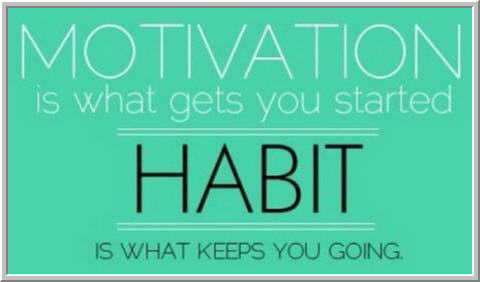
An excellent blog post from Bella at SMB takes a look at basketball star Ray Allen's letter that he wrote to his younger self. It's an unusually insightful letter, and Bella picks up on one of the letter's important themes: that success is not a function of any single great secret. Rather, success results from turning the right attitudes and actions into patterns that are so strong that they become "boring, old habits". We need motivation to kick start us into doing the right things, but rarely can we count on motivation to sustain the right mindset and behaviors. Repetition--doing the same thing, the same way again and again and again--is what turns a best practice into a robust process. A mistake many developing traders make is trying to change too many things at one time. They work one day on their entry execution, the next day on their emotional self-control, the next day on their trade sizing. All are fine goals, but the scatter-shot approach to change ensures that enduring habits will never result. It is far better to work on one goal at a time in a concerted manner that builds the right habit pattern than to address many goals and never make the transition from practice to process. So what's the positive trading habit you most need to develop right now? And what is the routine you're going to follow to give you the repetition that will turn motivated actions into automatic ones? Imagine having just one goal every month that you cemented into a positive habit. By the end of the year, you'd be transformed. Not through any grand insight or action, but from the accumulation of consistent actions. We are what we do: our trading psychology can be no better than our trading habits. Further Reading: Turning Success Into a Habit
.
The most impressive traders I know ask really good questions. The least impressive traders I know don't ask questions. This morning I've been up for a while and having quite a few online conversations. One of the major topics has been the recent rise in VIX, put/call ratios, and options skew in the index option market. Does that mean that bearishness is overdone? Does that mean that smart money is pricing in a surprise election outcome? In the face of such sentiment, how can one best position one's risk-taking before and after election results?
Out of these questions, I quickly updated a model of options skew that looked not only at the absolute level of skew, but also rates of change and skew volatility. Some very interesting patterns emerged, suggesting that a high level of downside hedging has been associated with subnormal near-term returns, but superior intermediate-to-longer term returns. In other words, we see hedging when the environment really is dicey, but it is those dicey environments that ultimately draw in value participants and lead to favorable longer run returns.
Good questions don't simply lead to good answers. As any scientist knows, good questions lead to good research and investigation. Research tells us that creative, productive people are great at problem finding. They ask *meaningful* questions. If we merely avoid or run from problems, we never ask the tough questions that yield important insights.
We would never choose to trade in a noisy and polluted physical environment, and yet many times we find ourselves trading in the psychological equivalent. When we are distracted, frustrated, and filled with negative thoughts, we unwittingly create an environment that works against our success. That is why successful traders work on themselves and not just on their trading. At 4:30 PM EST today, I will conduct the second webinar this week, this time focusing on psychological best practices and specific techniques for dealing with the psychological challenges of risk, reward, and uncertainty. The free webinar is hosted by John Locke and team; a link for registration can be found here. One unique aspect of the webinar is that I will be conducting most of it as a group coaching, where participants can bring their questions and challenges and I'll provide specific help in addressing those. Hope to see you there! Brett
.
It's been a good thing that I'm doing two webinars this week focusing on different aspects of best practices of the best traders I've known. (Next webinar is at 4:30 PM EST tomorrow). Reviewing the practices of successful traders helps me put into perspective what works in markets and what doesn't. Time and time I've found that to be the case: in teaching others, we cement our own learning. One best practice that came out in yesterday's session was the quality of time spent *not* trading, particularly when markets are open. When I think about really good traders I've worked with, the great majority don't spend their entire trading days staring at screens. Rather, they identify opportunity in advance, do their trading, and then move on to other productive activity, including researching new strategies and opportunities. Like any good company, the best traders spend significant time on research and development and reviewing/improving their own performance. That's what keeps them learning, growing, and adapting to changing markets. It's sad to say, but many traders spend so much time trading that they never do the things needed to truly master their craft. Peak performance requires time deliberately working on performance. A useful exercise is to look at your research and development pipeline and see if you're really moving the ball forward in your growth as a trader. If not, it might be useful to work on articulating your processes away from screens in as detailed a manner as you plan your trading time. Further Reading: How to Use Your Calendar to Become More Productive in All Activities
.
How do successful traders generate, express, and manage their best ideas? What best practices can you take away from your own successful trading? After the market close, at 4:30 PM EST, I will be conducting a free webinar hosted by the SMB Options Tribe. A good amount of time will be devoted to your questions about raising your trading game through best of breed trading practices. Here is a link for joining the webinar; hope to see you there! Brett
.
I love Porter's quote; it summarizes so much of what I've found in working with traders. The really good ones deliberately choose to be different. They look at things others don't look at; they view the world through multiple lenses. This enables them to find unique opportunities. There is a great post from Ivanhoff Capital that summarizes the trading strategies of a successful money manager. In that post, you can see how James Mai is playing on a multidimensional chess board, viewing markets short-term, long-term, and through the lenses of price change and volatility. He has a clear idea of where and how markets misprice risks, and he is willing to make many small, losing trades to find a limited number of large winners. I heartily recommend you read his ways of viewing markets, just as a way of appreciating how a successful trader deliberately chooses to be different. And how do traders learn these different ways of thinking? By being exposed to other traders who perceive and exploit unique opportunity. When an early career trader is brought into a trading firm, the single best predictor of his or her success is the degree of mentoring that occurs at the trading desk. When new traders are left to their own devices to sink or swim, they frequently sink. When traders are brought on as trading assistants and learn their way from the ground up through a mentor, they absorb ways of thinking about markets. Smart training programs allow their new talent to rotate from one trading desk to another, so that they absorb a variety of ways of thinking about markets.
This is why I occasionally post on research I'm doing, creating such measures as "pure sentiment". I'm illustrating a way of thinking, whether you follow that particular measure or not.
After all, learning from example is why developmental efforts from plumbing to psychotherapy to medicine are structured as apprenticeships. We learn by absorbing the wisdom and experience of masters and then by integrating that learning into our own, unique style. We can deliberately choose to be different by exposing ourselves to different talent and ideas. Further Reading: Creativity and Innovation
.
When we trade with confidence and conviction, we run the risk of becoming a stiff tree in Bruce Lee's terms. I find that successful traders are cognitively flexible, able to bend with changing winds. Traders often lament that markets are choppy. In many cases, the real problem is that winds are changing more quickly than traders can bend. We attempt holding periods of X, when markets are moving to a beat of only a fraction of X. A nice example of this occurred in Friday's SPX trade. As longtime readers know, there are three things I find important to focus upon in the market. Those include an assessment of who is in the market and which way they are leaning. Two of the ways I measure this in the trading model I created is the total number of upticks and downticks among all listed stocks in the market (a measure of institutional participation) and a measure of "pure sentiment" that adjusts the put/call ratio for recent price movement and volume. Interestingly, both were elevated on Friday: we had increased institutional participation and this participation was significantly bearish. Since 2014, when this has occurred, the next five days in SPY have averaged a gain of +.62% versus an average loss of -.07% for the remainder of occasions, with 65% of occasions resulting in a winning five-day period. Indeed, stocks did bounce later in the session and we'll see how they fare this coming week. The important point is that knowing what to look at told the trader that the odds in the market had shifted; that a downside edge that might have been there the day before was no longer a downside edge. The inflexible trader, not reading this shift, might end up frustrated, convinced that the market was being "manipulated" and not allowed to drop. The reality is that the odds in the market had shifted because new, large participants were bailing out. That bailing out tends to attract value participants who treat the lower prices as great buying opportunities. Too many traders think of their edge in markets as a fixed thing. Rather, edge in markets is always waxing and waning, depending upon who is in markets, what they are doing, and the time frame of their activity. When we view edge dynamically, we are able to be flexible and bend with changing market winds. It's the inflexible bull or bear that is most likely to break. Further Reading: Controlling Emotions is NOT the Goal of Trading Psychology
.
Greg Louganis' quote speaks a vital truth about peak performance. Many of us seek mindfulness through meditation when we are still, in a quiet environment. Peak performance demands something yet greater: the maintenance of the clear, mindful "zone" while we are in motion--that is, while we are performing.
A major challenge for traders is that we become so market-focused and caught up in chats and news flows that we lose the zone. We become frenzy in motion, not meditation in motion.
The recent article I wrote for Forbes addresses this dilemma and offers a unique solution: using a simple calendar app to sustain deliberate practice and the peak performance mindset. Imagine being a trader and reviewing your performance and setting goals each week. Now imagine turning the wheel faster and creating rapid review and goal-setting processes each day. Quite simply, to use a gym analogy, you're getting more reps than the person who comes into the weight room only occasionally. Learning has the potential to become elite development when every day of performance also serves as targeted practice.
Why is this important? It's because there is a mutually reinforcing relationship between peak performance and peak emotional experience. It is when we push our boundaries and expand our competence across all areas of life that we are most likely to experience happiness, fulfillment, energy, and closeness with others. And it is when we are most energized by positive experience that we're most likely to channel that energy into meaningful development. Many traders sense that it wouldn't take much to bring them to that next level of performance. I suspect they're right: they just need more and better reps in life's gym. Further Reading: Turning Your Calendar Into A Peak Performance Tool
.
How many of the following apply to you? Please answer true or false to each item: * I've clearly and visually mapped out my trading process, from the ways I collect information and generate ideas to the ways in which I express those ideas as trades (and as constituents of a portfolio), enter and size positions, manage and adjust positions while they are open, and exit trades. True False
* I've clearly and visually mapped out my personal process to maximize performance, from how I sleep, eat, exercise, socialize, and utilize my non-work time to sustain a peak state. True False * I explicitly keep score in written fashion, not just with my profits and losses, but with each component of my trading and personal processes to see what I've done well and what I can improve in process terms. True False * I use my trading and personal process scores to explicitly identify written goals for improvement and the concrete steps I will commit to in order to achieve these goals. True False * I keep a written scorecard of my performance vis a vis each of my goals to track my progress and, if necessary, make adjustments in how I pursue the goals. True False * I use my scorecard to make ongoing adjustments to my trading and personal processes, so as to turn initial improvements into ongoing habit patterns. True False Every trader goes through losing trades and losing periods. When we're not in peak performance mode, losing money is a fail. In peak mode, losses become First Attempts In Learning. Peak performance mode is our way of committing ourselves to growth and improvement; it's our way of becoming accountable to ourselves. Merely writing in a journal does not ensure deliberate practice and ongoing improvement. We become better by keeping score in process terms and continually refining our personal and professional processes. Further Reading: The One Trading Drill That Can Improve Performance .
When my daughter Devon was quite young, we had a toy doctor's kit and one day decided to play "doctor" with one of her dolls. I gave Dev the stethoscope and other equipment and I said I would help her with the examination. She looked confused and gave the stethoscope back to me. She said, "You be the doctor, I'll be the nurse." When I asked her why I should be the doctor, she gave me a puzzled look--as if I should know better--and said, "Boys are the doctors!" I was dumbfounded. Never had Margie or I explicitly said anything of the sort to Devon. When I reflected, however, I realized that all her doctors had been men and all her nurses had been women. She couldn't think of herself as a doctor because she had never seen a female physician! That was a perception I was eager to correct. I fear much of the same thing happens in the field of finance. As I documented in a Forbes article last year, women are woefully underrepresented in the world of money management. During the time I've participated in recruitment of traders and portfolio managers, resumes from men have outnumbered those from women by 20:1. Even when women are hired by financial firms, they often lack upward career paths. For example, as my article outlines, six of the ten career fields in which the income gap between men and women is greatest are in the world of finance. This is all the more ironic because research cited in the Forbes piece clearly shows that men tend to be more prone to cognitive biases and poorer trading/investment decisions than women, often as a result of overtrading and excessive risk-taking. Conversely, many of the factors that account for career success are "soft skills" associated with interpersonal skill and emotional intelligence. Managers account for 70% of the variance in employee engagement scores, with relationship and communication skills making the critical difference--qualities more often associated with feminine sex roles than masculine ones. Fortunately, efforts are under way to cultivate trading and leadership talent among women. Most noteworthy is the trading competition being sponsored by Zolio. The contest has just begun, but it's not too late to sign up and participate. Contestants select a portfolio of stocks and/or ETFs that are tracked for performance. Participants also keep a journal and manage their portfolios. Prizes are awarded, not just for profitability, but also for process-oriented factors such as risk management and creativity. Winners are invited to a Boston meet and greet with industry leaders in finance. The idea is to open a door for women, who like my daughter, may never have thought of themselves as a successful person in a "male" occupation. Because the competition is free, it's a great way to explore the field and get a feel for what it's like to manage capital. So often, our greatest limits are those that we cannot see, that are embedded in our assumptions about ourselves and the world. There are many opportunities possible for all of us if we can expand our vision of who we are and what we're capable of. Further Reading: Social Intelligence and Trading Skill
.
You have a cross-country trip to take, and it's a must-do trip. You have to leave immediately and all that are available is a charter plane and your choice of two available pilots. The first pilot has flown this plane before but has a longstanding negative reputation as being someone who will overcharge you and most likely take you to unannounced stops before (possibly) arriving at your destination. The second pilot loudly announces how great the ride will be and how dishonest the other pilot is, but has never flown a plane before. Must-do trip. Two pilots. Your choice. Further Reading: Why Character Matters .
One question active traders too often fail to ask is, "What would I be doing with my life if I weren't trading?" We're familiar with the direct costs of trading, such as the expenses we incur for software, commissions, and the like. Less clear are the indirect costs--and especially the opportunity costs--associated with trading. When we're glued to screens, there are many activities we cannot participate in. Some of those activities may represent areas of strength, ones where we could excel and contribute. I meet many traders who limp along in their profitability, afraid to ask the big questions, because they not sure what they would do with their lives if they weren't trading. They justify trading as a "passion", when in fact it's a black hole that has sucked them in so far that they cannot see an alternative future. Is your trading giving you the financial and emotional returns you desire? Are you a better person for your trading, or does trading interfere with relationships and other important parts of life, such as your physical fitness and emotional well-being?
Are there things you could--and maybe even should--be doing in your life that can't be accomplished because trading gets in the way? Per Bob Marley's question above, are you truly satisfied with the life you're living? Most traders ask how they can become better traders. Few ask whether they truly should be trading. Sometimes the answer is not trading versus not trading, but figuring out how to make trading fit into your life, rather than fitting your life to markets. When I developed a medium term trading model, I discovered that opportunity is asymmetrically distributed during any given year. There are stretches of time with little opportunity, other periods with more opportunity, and a few periods with unusually good opportunity. It's possible to participate during occasions with high opportunity, profit from markets and market involvement, and still have a life for a fulfilling career, family, and personal pursuits. The goal is not to be a profitable trader. The goal is to profit from the life you live. Further Reading: Trading as an Addiction
.
Traders are often concerned that their ideas might fail simply because they have become "too consensus". That is, if many other participants are positioned in the same idea, the risk/reward may become negatively skewed. There aren't many traders left to move the position further in the desired direction and, should prices start to move the other way, there can be a stampede for the exits quickly putting positions under water. Sentiment in the stock market is one way of gauging market psychology and whether there may be a bullish or bearish consensus. Unfortunately, the standard measure for assessing sentiment, the put/call ratio, has several weaknesses. First, it often mixes together put and call trading for stock index options and for the options on individual equities. My work shows those are different distributions, with different impacts on markets. The equity-only put/call measure, where options across all exchanges and all listed issues are included, has been the best measure for sentiment. A second problem with the standard put/call ratio is that it is itself impacted by past price movement and volatility. When markets rise, the ratio tends to decline and vice versa. The pure sentiment measure I created is akin to the pure volatility measure, which adjusts implied volatility for the amount of realized volatility and past price movement. Pure volatility thus tells us how much movement is being priced into options for a given amount of recent movement and realized volatility. In other words, it shows us how VIX may be under-reacting or overreacting to recent price behavior. Similarly, pure sentiment adjusts the put/call ratio for recent price movement and volatility. The pure sentiment measure (shown above) tells us when we are "too" bullish or "too" bearish, given recent price behavior. Interestingly, going back to 2014, pure sentiment has been a decent near term predictor of stock index prices--so much so that I added it to the ensemble model recently described. By a simple median split, when pure sentiment has been high (too bearish for the amount of market movement we've seen), the next ten days in SPX have averaged a gain of +.71%. When pure sentiment has been too low (too bullish for the amount of recent market movement), the next ten days in SPX have averaged a loss of -.17%. The numbers stand out even more at the extremes. Notice how, in the recent market, we've had quite a few high readings in pure sentiment. (Friday closed bullish on the pure sentiment measure; the overall ensemble model closed at a flat 0). We've seen weakening breadth in stocks and many participants have been anticipating a market top, but prices have tended to bounce higher after we've seen selling. The bearish sentiment/positioning may have something to do with that. It's a facet of the market I'll be tracking closely in coming days. Many, many market indicators can be improved by looking at whether and how they anticipate forward price movement once correlated market factors are removed. It doesn't help to look at 12 different market indicators if they all are significantly correlated. When we remove the correlations, we come closer to measuring the true factors that move stock prices. Further Reading: Pure Volatility
.
I recently posted on the importance of identifying who is in the market as a way of gauging how the market is likely to move, tracking the behavior of large institutional participants. A different way of assessing market participation is by looking at speculative sentiment in the market. This can be accomplished by looking at total options volume, not just the ratio of put volume to call volume.
When total equity options volume (volume of options trading for stocks listed across all options exchanges) is in its lowest quartile going back to 2014, the next 10 days in SPY have averaged a loss of -.51%. When total options volume has been in its highest quartile, the next 10 days have averaged a gain of +.91%. If we strip out the role of total trading volume from total options volume in a regression model, we find that when pure options volume is in its lowest quartile (as was the case after Monday's close), the next 10 days in SPY have averaged a loss of -.41% versus an average gain of +.49% for the remainder of the sample.
In other words, when speculative sentiment has died out, the market has been most vulnerable to correction. Bear moves tend to end in a frenzy of activity, as value and momentum participants become involved at multiple time frames. Bull moves tend to end in complacency and lack of interest, as the market becomes too dull for momentum participants and too rich for value players. It is the interplay of high and low participation, tracking the activity of different participants, that creates the dynamics of market cycles. Further Reading: Volatility and the Dynamics of Market Cycles
.
TraderFeed will be taking a sabbatical during the month of October, with occasional postings on the market and on trading psychology. During the sabbatical, I'll be finishing a co-edited book on brief therapy and completing a personal project. That personal project will be a major subject during November's posts.
Over the October sabbatical, I'll also provide occasional updates of scores from my multivariate model, which I've revised to include a new measure of sentiment. That new measure views put volume and call volume as independent variables, rather than simply taking the ratio of the two. So we look for occasions when put volume is unusually high or low and the same for call volume.
Model scores range from +6 (very bullish) to zero (neutral) to -6 (very bearish). The chart above shows average 10-day returns as a function of model score from 2014 to the present. Hit rates on trades taken mechanically have been as one would expect from the above chart, with 64% of trades finishing up when scores have been 1 or 2; and 63% of trades finishing down when scores have been between -2 and -3 and very high hit rates at the bullish and bearish extremes. We closed Friday with a score of +2, moderately bullish. Further Reading: What We Can Learn From Quant Models
.
Just thought I'd update this post on what it means for stocks when we see a high degree of institutional participation in the US equity market. Yesterday's reading was in the highest quartile, which has been associated with significantly above average returns over a next 10-day period. Interestingly, we also saw an elevated equity put/call ratio, also associated with favorable next 10-day returns in SPY. Meanwhile, several of my cycle measures have been pretty toppy. There are times when things line up and there are times when they don't line up. A useful psychological exercise is to assume that, at some point, everything will line up. What would you need to see for such a line-up to occur? Anticipating potential price paths is a first step in preparing to trade them. Being aware of when things aren't lining up is a great way to avoid overtrading.
Above we can see SPY (blue line) plotted against a six-variable trading model that I developed using ensemble modeling. When we have a positive score, the model is deemed to be bullish over a next 10-day horizon. When we have a negative score, the model is deemed to be bearish. The model is flat as of yesterday's close. The model includes such variables as market volatility, breadth, buying/selling participation, and market cycle status.
When the model has been at a score of +2 or higher, the next 10 days in SPY have averaged a gain of +2.08%. When the model has been at a score of -3 or lower, the next 10 days in SPY have averaged a loss of -.83%. Between scores of +1 and -2, the next 10 days in SPY have averaged a small loss of -.08%.
The model has a couple of important implications for trading psychology:
1) Out of the 573 days of my in-sample and out-of-sample periods, nearly half are scores less than +2 and greater than -3: in other words, days with essentially no edge 10 days out. That doesn't mean sources of edge can't be found on different time frames with different models, but this finding is important. Even with a solidly researched source of edge, there are plenty of occasions when not trading is the best trade.
2) The model signals have been good, but even with their edge, there is plenty of noise. Note, for example, that the model was bearish during much of mid-2015, when prices chopped around quite a bit. We were also bullish during fall, 2015 during a volatile bottoming period. A trader could have an edge with a model but be unable to survive the noise around signal, especially if sized quite large. 3) I suspect the model works because it's exploiting cyclical behavior in markets at a time frame that is too long for active traders and too short for true investors. A key to trading the model, as we've seen, is not placing trades when there is no clear signal. There have been no solid signals from the model in the last 14 trading sessions; such periods are not rare. It's the selectivity of the model that might be its greatest advantage. 4) Such models don't have to be traded mechanically. For instance, a short-term trader could use the model to decide when to trade with a directional bias and when to take short-term setups without such bias. More fundamentally grounded traders could use models such as these to help with the execution of longer-term positions. Good models provide good information; that information can be useful in discretionary decision making. The act of developing models itself gives one a feel for markets. The model inputs are there for a reason: the model simply captures when those reasons line up. It is interesting that the most rational of analyses can feed the deepest intuitions. Further Reading: The Psychology of Quant Analysis
.
There are risk-averse traders who never make significant money. There are risk-seeking traders who blow up. Then there are smart traders who take calculated risks. They make selective bets. Like the skilled poker player, they know when they have a good hand and they know how and when to bet that hand. But to take calculated risks, you have to know how much risk you're truly taking. Several factors impact the risks in your trading: * The sizing of your positions - It's not uncommon for small traders to have big dreams and take positions that are unusually large for the amounts of capital they're trading. Any trader can experience strings of losing trades merely by chance. When position sizes are too large, those strings of losers incur a risk of ruin. Once you're down 50%, it takes a doubling of remaining capital just to return to break even. * The volatility of your markets - Volatility can change dramatically from day to day, week to week, depending on the participation in your markets. This can be particularly true around major events, such as central bank meetings, earnings reports, etc. You want to size your positions, not only for the current volatility of the market you're trading, but also for the expected "vol of vol": the expectable variation in volatility over the life of your intended holding period. * The correlation of positions you are trading - When the positions you are trading are negatively correlated, the overall risk in your book can be smaller than the risk associated with each of the positions. Conversely, when you trade multiple positions that become correlated, your total risk exposure can grow exponentially. Some short-term traders only hold one position at a time, but can experience correlation-related risk if they habitually lean one way in markets (long or short, for example). They end up taking bets that are not truly independent ones. Traders of individual equities often treat their positions as independent when, in fact, those positions can respond very similarly to large moves in the overall market. Risk is important because it impacts trader psychology. If the amount of risk you're taking dramatically expands or shrinks, you're likely to react to the change in the ebb and flow of your P/L. In order to take calculated risks, you have to be able to estimate and calculate risk--and the possible ways risk can shift over time. We often think of trades as directional bets, when in fact they are also implicit bets on *how* markets move. Further Reading: Risk Intelligence and Trading Success
.
Author of The Psychology of Trading (Wiley, 2003), Enhancing Trader Performance (Wiley, 2006), The Daily Trading Coach (Wiley, 2009), Trading Psychology 2.0 (Wiley, 2015), The Art and Science of Brief Psychotherapies (APPI, 2018) and Radical Renewal (2019) with an interest in using historical patterns in markets to find a trading edge. Currently writing a book on performance psychology and spirituality. As a performance coach for portfolio managers and traders at financial organizations, I am also interested in performance enhancement among traders, drawing upon research from expert performers in various fields. I took a leave from blogging starting May, 2010 due to my role at a global macro hedge fund. Blogging resumed in February, 2014.





 Posts
Posts


